
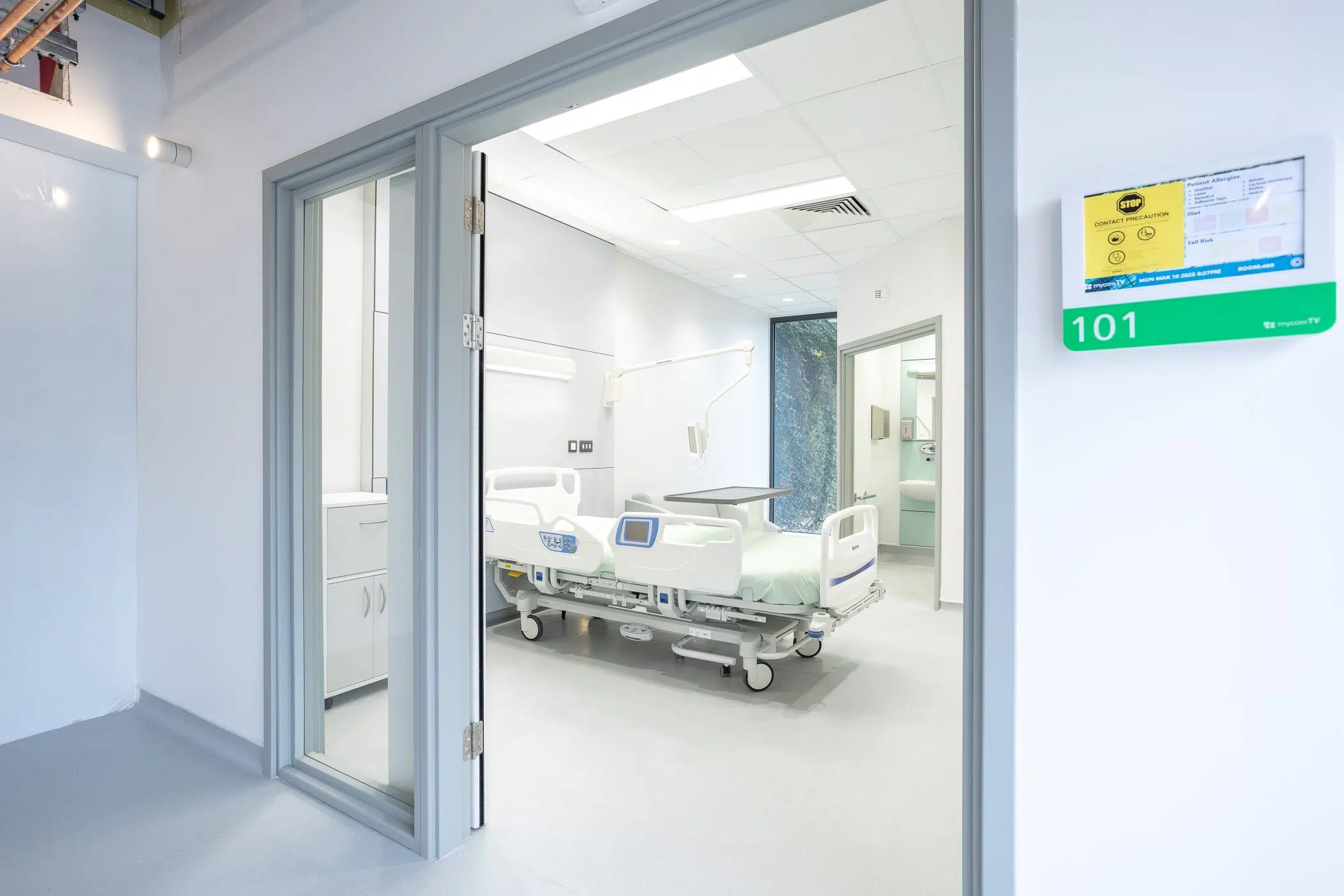
- Reds10 delivered a full‑scale modular prototype of a standardised Hospital 2.0 inpatient bedroom, enabling the NHP to test clinical functionality, digital integration and operational workflows before national rollout.
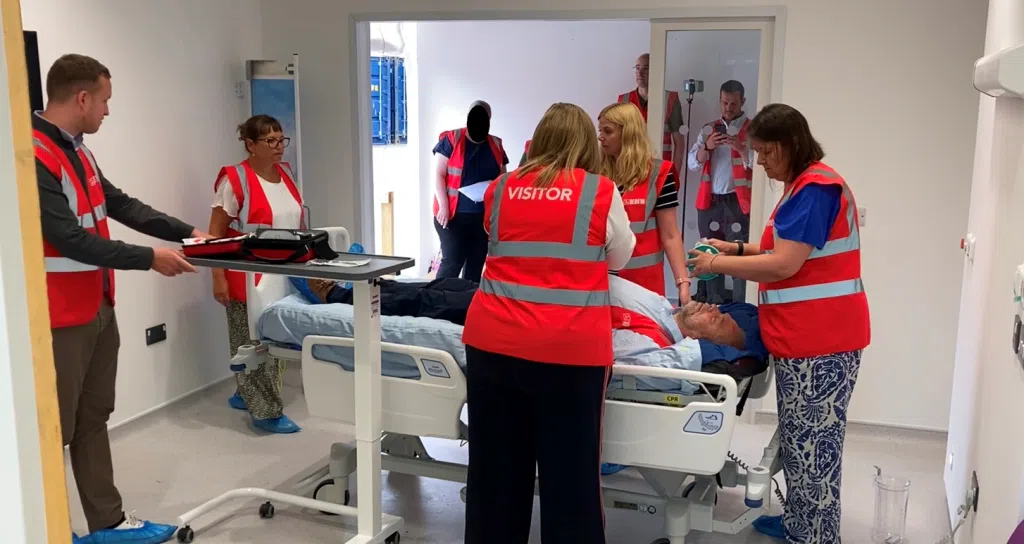
- The prototype reduces risk and accelerates delivery, allowing more than 1,500 stakeholders to review and refine the design early.
- Built in just 30 days at Reds10’s advanced offsite facility, the prototype demonstrates the sustainability, efficiency and accuracy of industrialised construction.
Reds10 delivered a full‑scale modular prototype of a standardised Hospital 2.0 inpatient bedroom, enabling the New Hospital Programme to test clinical functionality, digital integration and operational workflows before national rollout.
The prototype reduces risk and accelerates delivery, allowing more than 1,500 stakeholders to review and refine the design early—avoiding costly late‑stage changes and supporting the NHS’s push for standardised, repeatable hospital construction.
Built in just 30 days at Reds10’s advanced offsite facility, the prototype demonstrates the sustainability, efficiency and accuracy of industrialised construction, supporting the NHS’s long‑term Net Zero and modernisation goals.
What Reds10 Delivered
The New Hospital Programme (NHP) commissioned Reds10 to deliver a full scale modular prototype of a standardised inpatient bedroom, designed to accelerate the government’s Hospital 2.0 programme. Hospital 2.0 is the NHP’s new approach to delivering the next generation of hospitals—standardised, repeatable, and clinically optimised spaces designed for faster and more cost effective construction.
This allowed the NHP to test the room as a complete operational environment, ensuring it meets clinical, estates, digital, infection control and patient experience requirements.
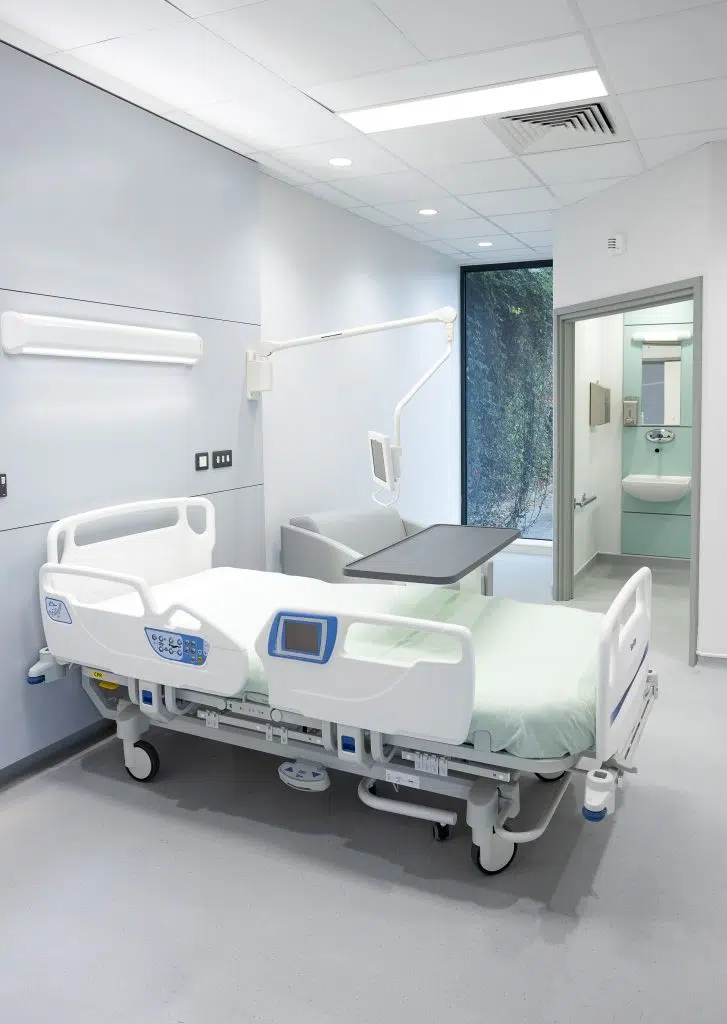
Reds10 produced a prototype that includes:
- a fully furnished inpatient bedroom
- an ensuite bathroom pod
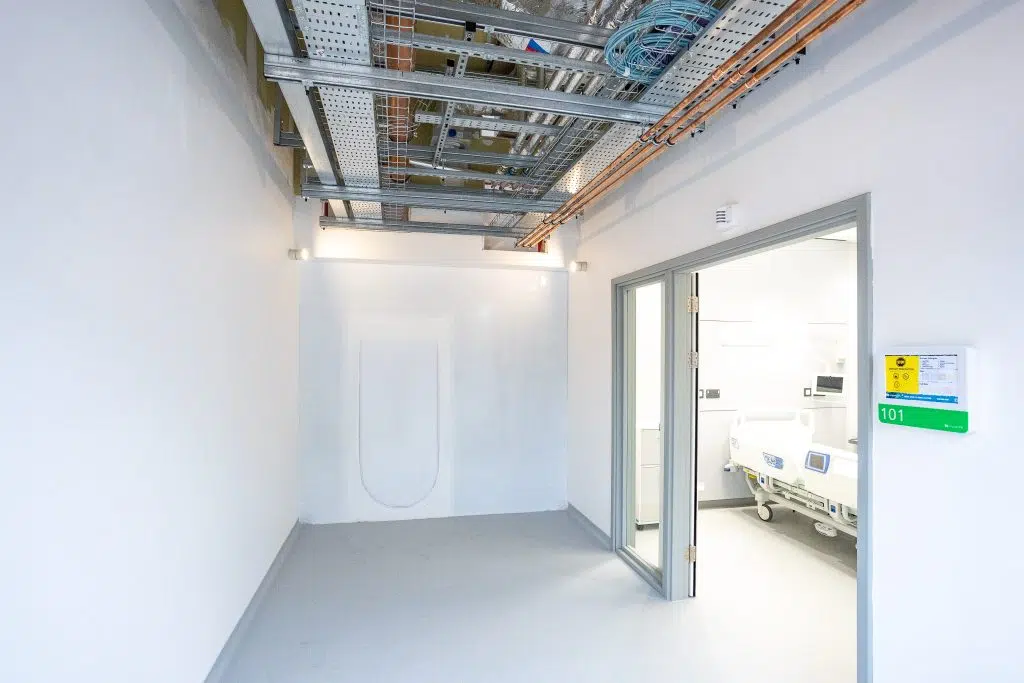
- the adjoining corridor space
The prototype enables the NHP to evaluate functionality before full-scale national deployment, ensuring a “right‑first‑time” approach to the construction of future hospitals across England.


DELIVERING A FUTURE READY HEALTHCARE ENVIRONMENT
This prototype plays a critical role in validating:
- spatial layout and clinical workflow
- mechanical, electrical and plumbing (MEP) interfaces
- accessibility and operational efficiency
- integration of digital systems and modern technologies
By prototyping early, the NHP can resolve design challenges in a controlled environment rather than on live hospital construction sites, significantly reducing project risk.
The model also supports patient safety improvements, infection control optimisation, and design refinements that would be difficult to achieve late in the programme.
DESIGN & LAYOUT HIGHLIGHTS
Internal Design
The room was developed through collaboration between clinical experts, technical specialists and user groups. It reflects:
- standardised bed positioning and clinical workflow routes
- patient centric layouts to support dignity and recovery
- integrated ensuite for improved infection control
- coordinated equipment zones and storage
- therapy, monitoring and digital ready features
This holistic design approach allows the NHS to assess how the space performs for all disciplines—nurses, therapists, estates teams, infection control specialists and patient forums.
External and Systems Integration
The corridor portion of the prototype allows the NHP to review:
- wayfinding and visibility lines
- logistics and equipment movement
- cleaning and maintenance access
- MEP service runs and coordination
This whole system testing is central to Hospital 2.0’s aim of avoiding costly late stage modifications.
SUSTAINABILITY AT THE HEART OF THE BUILD
The prototype demonstrates the potential of offsite industrialised construction to support the NHS’s long term sustainability goals. Reds10 manufactured the room at its 300,000 sq ft advanced facility in Driffield, which uses automated and data driven production processes to maximise efficiency and minimise waste.
Standardisation under Hospital 2.0 enables:
- improved material efficiency
- reduced carbon through repeatable manufacturing
- faster build cycles
- reduced disruption on hospital sites
- long-term operational efficiencies based on identical layouts
This modular approach supports the NHS’s commitments to Net Zero Carbon and resilient estate planning.
IMPACT & INNOVATION
Reds10’s delivery of the inpatient bedroom prototype is a cornerstone of the NHP’s Hospital 2.0 model.
The approach will:
- accelerate hospital delivery
- increase productivity through standardisation
- reduce overall programme costs
- ensure facilities are clinically tested and future ready
- create a national library of components and learning for ongoing iterations
If adopted, the room will become the standardised inpatient bedroom across the entire New Hospital Programme.


