Thomas Telford Primary Free School completes

Reds10 has handed over Thomas Telford Primary Free School in Priorslee, Telford, providing a permanent home for 420 primary pupils and a 26-place nursery to serve families in the growing Priorslee community.
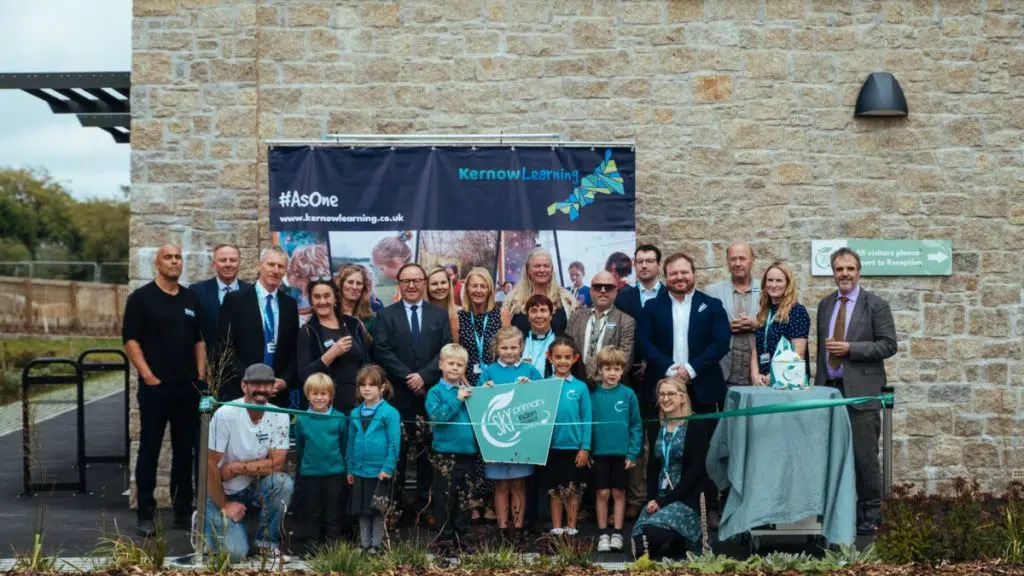
Pupils, staff and families celebrated the opening on 22 October 2026, together with the MP for Telford, Shaun Davies, local councillors, Reds10, the Department for Education and other project partners. The school’s oldest and youngest pupils took part in a ribbon-cutting ceremony before a commemorative plaque was unveiled. Guests were then welcomed inside to tour the building, meet staff and pupils, and explore classroom activities and displays of children’s work.
Delivered through the Department for Education’s Free Schools Programme, the new two-storey school on George Lees Avenue provides modern teaching spaces, extensive outdoor facilities and a sustainable learning environment.
A floodlit multi-use games area, netball court and sports pitches give pupils space for sport and recreation, while the nursery has its own dedicated play area. Landscaped grounds, new planting and habitat areas complete the school’s outdoor spaces.
Built using Modern Methods of Construction (MMC), the permanent school is made up of 78 modules manufactured off site. This approach reduced on-site construction activity and helped the team manage delivery alongside neighbouring housing developments. The project was delivered on programme.
Despite challenging site conditions that required significant earthworks, Reds10 worked closely with the school, neighbouring developers and local stakeholders throughout the project to coordinate access and deliveries, helping minimise disruption to the surrounding community.
The completed school has been designed to meet the Department for Education’s Net Zero Carbon in Operation requirements. Air source heat pumps, solar panels and intelligent classroom ventilation controls support energy-efficient operation, with a smart building management system monitoring performance. A green roof and dedicated habitat areas support biodiversity, while cycle storage and electric vehicle charging infrastructure are also provided.